Pillows · A practical guide
What Pillow Fill Power Tells You About Loft, Feel, and Support
A high fill-power number sounds like a promise of plushness. It is better understood as a clue: useful when you know how to read it, incomplete when you don’t. Here is how to weigh fill power against pillow height, firmness, construction, and the way you sleep.
Shopping for a down pillow can feel like learning a new vocabulary of comfort. Loft, fill weight, firmness, fill power: each term gestures toward how a pillow might behave, yet none describes the whole experience of resting your head on it. Fill power is one of the most useful specifications to understand, especially when comparing down pillows. It tells you about the loft potential of the down, not whether the pillow will be soft, supportive, or exactly right for your sleep position.
That distinction matters. A lofty pillow can still compress substantially under the weight of your head. A pillow with a relatively high fill-power rating can feel yielding rather than firm. And a lower-profile pillow may be a better match for one sleeper than a generously filled, cloudlike option. The most satisfying choice comes from reading the number alongside the pillow’s fill amount, construction, and intended feel.
Think of fill power as one detail in a larger portrait. It can help explain why a pillow feels airy and resilient, but it cannot, on its own, determine support. To choose well, consider how the pillow settles beneath you, how much space your shoulder creates between your head and mattress, and whether you tend to sleep on your side, back, or stomach.
What does fill power mean?
Fill power measures the volume occupied by a given weight of down under standardized testing conditions. It is commonly expressed as a number: for example, 650, 750, or 850. In general, a higher number means that the down clusters loft more, occupying more space for the same weight. Because loft traps air, higher-fill-power down can create a lofty, light sensation without requiring as much fill by weight.
The number is not a measurement of the pillow’s finished height, and it is not a direct rating of firmness. It describes a property of the down itself. Once that down is placed inside a particular shell, in a particular quantity and arrangement, the resulting pillow may feel quite different from another pillow carrying the same rating.
It helps to separate three ideas that are often blended together in product descriptions:
- Fill power describes the lofting capacity of the down relative to its weight.
- Fill weight describes how much down is used in the pillow.
- Loft and firmness describe how the finished pillow looks and feels, including how it responds when compressed.
These factors interact, but they are not interchangeable. A higher fill-power down used sparingly may produce a different feel from a lower fill-power down used more generously. Likewise, shell fabric, internal construction, pillow dimensions, and the sleeper’s body all influence the experience. The number is a starting point for comparison, not a verdict.
Loft, explained without the mystique
Loft is the pillow’s height and fullness, both before and after it is put to use. A pillow may look high and airy on a bed yet compress considerably under the head. For sleep, the relevant question is not simply how tall it appears when fluffed, but how much height remains once you settle into your usual position.
Down is prized for its lightness and its ability to spring back after being compressed. The clusters can create a soft, billowy surface that feels less dense than many solid or tightly packed fills. A higher fill-power rating may help a pillow feel more expansive for its weight, but overall pillow loft still depends on the amount of fill and the way it is contained.
That is why two pillows can both be described as lofty and still feel unlike one another. One may have a generous amount of fill and hold a more substantial shape. Another may offer a soft, airy first impression but yield readily beneath the head. Neither is automatically better. The useful distinction is whether the pillow maintains the height you need without creating pressure or pushing your neck out of a comfortable line.
Why fill power does not equal firmness
Firmness is a sensation of resistance: how much a pillow pushes back as you press or rest on it. Fill power is a measure of down’s lofting capacity. A high fill-power pillow can feel soft if its fill is light or readily compressible, while a pillow with a lower rating can feel more substantial if it contains more material or has a construction that limits how freely the fill shifts.
Down pillows are often described using terms such as soft, medium, or firm, but those labels are not universal standards. They can help narrow the field when comparing pillows within one collection, yet they are best treated as guidance rather than exact predictions. If possible, compare descriptions of firmness with information about fill amount, chamber design, gussets, and the pillow’s intended sleeping positions.
There is also a difference between the sensation at first contact and support over the night. A pillow may feel wonderfully soft at the surface, then compress until it no longer holds enough height. Conversely, a more resilient pillow may initially feel fuller but settle into a comfortable shape. The goal is not maximum firmness or maximum loft; it is a stable, comfortable position that suits your body.
The role of fill amount and construction
Fill amount is a major part of the story. More down can create a fuller pillow, but the result depends on its loft, the space available inside the shell, and how the pillow is assembled. A pillow packed tightly may feel more resistant than one with room for the fill to move. A gusseted edge, where present, can help create a more defined profile, although its effect varies with the fill and overall design.
The shell matters, too. Its fabric, weave, dimensions, and finish influence how the fill is contained and how the pillow feels against the face. A closely woven cotton cover, for instance, contributes to the finished construction, but it does not replace the need to assess fill and support. The pillow is a system: fill, shell, shape, and use all work together.
When comparing down pillows, look for a clear description of fill power and firmness, and check whether the manufacturer provides information about the fill amount or construction. Product details can make comparisons more meaningful, but a specification should not be mistaken for a guarantee of personal comfort. Sleeping position, mattress firmness, shoulder width, and individual preference remain decisive.
Choosing pillow loft for your sleep position
Your usual sleep position offers a practical first filter. The aim is generally to keep the head and neck in a comfortable, neutral relationship with the rest of the spine, rather than tilted markedly up or down. The right pillow height depends not only on position, but also on the shape of your body and how deeply your mattress allows your shoulder or hip to settle.
Side sleepers
Side sleepers often need more height than stomach sleepers because the space between the head and mattress is influenced by shoulder width and mattress compression. A pillow that is too low may let the head angle downward; one that is too high may push it upward. A medium-firm or fuller down pillow can be a starting point, but pay attention to how much it compresses beneath your head. Loft that looks impressive on the bed may not be enough once you lie down.
Back sleepers
Back sleepers commonly look for a middle ground: enough height to feel supported, without forcing the chin toward the chest. A medium loft may suit some people, while others prefer a softer, lower pillow or a more substantial one. Your mattress and body proportions influence the result. If you wake with persistent discomfort, a pillow’s height and shape may be worth reassessing, but discomfort can have many causes and should not automatically be attributed to bedding.
Stomach sleepers
Stomach sleepers often prefer a softer, lower-profile pillow. Too much height can place the head at an uncomfortable angle, so a lofty, resilient design may not be the most natural choice simply because its fill-power number is high. A compressible pillow may better match this preference, though the ideal feel is personal. Some stomach sleepers use a very thin pillow or none beneath the head.
Combination sleepers
If you change positions during the night, consider whether the pillow adapts comfortably as you move. A responsive down pillow can be fluffed or reshaped, which some sleepers enjoy. Others prefer a shape that stays more consistent. Look for a balance between softness and recoverable loft, and remember that a pillow that feels ideal on your side may feel too high when you roll onto your back.
A real-world example: 750 fill power
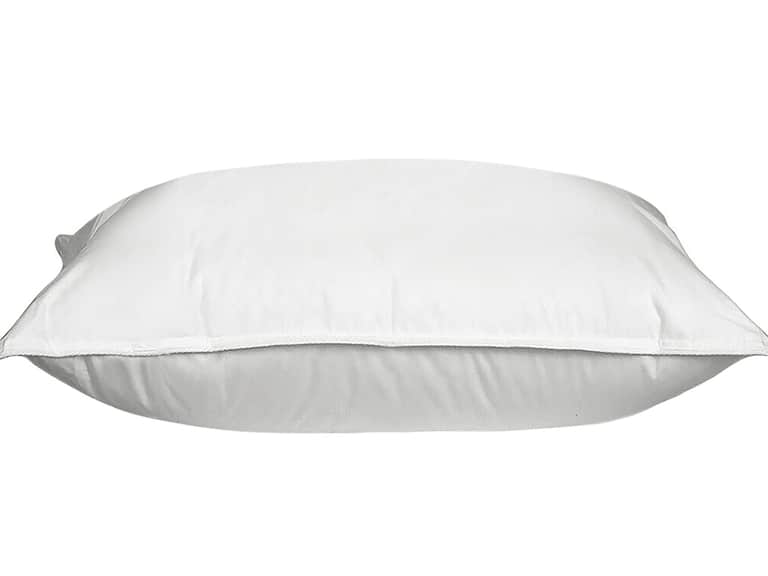
The Clean Bedroom Madison Down-Filled Pillow offers a useful illustration of how a specification sits alongside other information. It is described as a medium-firm pillow filled with 750 fill-power large-cluster Hungarian white goose down. It is positioned for side and back sleepers and is available in several sizes, including Standard/Queen, King, Euro, and Boudoir. Its tightly woven cotton cover and the stated firmness provide context that the fill-power figure alone cannot convey.
In other words, the 750 rating helps describe the loft potential of its down, while the medium-firm description and intended sleep positions help frame the finished feel. Whether it is right for you still depends on the height you need and how the pillow responds beneath your head. You can explore the Madison Down-Filled Pillow details as one example of comparing a fill-power figure with firmness, construction, and sizing information.
How to compare pillows without getting lost in numbers
A useful comparison begins with your own comfort preferences, then uses product specifications to refine the search. Instead of looking for the biggest number, ask what you want the pillow to do. Do you want a soft, yielding surface? A fuller profile? A pillow that can be reshaped? Are you a side sleeper seeking more height, or a stomach sleeper who prefers a low, easily compressed feel?
- Start with sleep position. Decide whether you mostly sleep on your side, back, stomach, or move between positions.
- Consider the height you need. Account for shoulder width and how deeply your mattress compresses under you.
- Read firmness separately from fill power. A higher fill-power rating does not automatically mean a firmer pillow.
- Check the fill amount and construction. These details help explain how the down is used and how the pillow may hold its shape.
- Look at size and care information. A pillow protector and appropriate care can help preserve the pillow’s condition.
- Allow for personal preference. Labels are helpful, but your experience of comfort is the final measure.
When the product description is brief, ask the retailer or manufacturer for clarification about firmness, intended sleep positions, and care. If you can test a pillow in person, give it time to settle rather than judging only by the first squeeze. At home, evaluate it in your ordinary sleep setup: the mattress, position, and bedding you use every night.
Common misconceptions about fill power
“Higher fill power means more support.” Not necessarily. It indicates greater loft potential for a given weight of down. Support depends on how the finished pillow behaves under your head, including fill quantity and construction.
“Higher fill power means a taller pillow.” Not by itself. A pillow’s apparent and usable height depend on the amount of fill, its arrangement, shell dimensions, and compression. The number does not specify finished pillow height.
“A high number is always the best choice.” The best pillow is the one that fits your sleep position and comfort preferences. A softer, lower-profile option may be more appropriate for a stomach sleeper than a lofty design.
“Firmness and loft are the same thing.” Loft refers to height or fullness; firmness describes resistance. A pillow can be lofty yet soft, or less lofty yet feel comparatively firm. They can influence one another, but they are separate qualities.
Comfort is the measure that matters
Fill power offers a concise way to compare the loft potential of down, and it can help explain the light, airy quality that makes down pillows appealing. But the number becomes useful only when placed in context. Fill amount, firmness, shell and construction all shape the finished pillow, while sleep position and personal preference determine whether that design feels right to you.
Choose by working from the experience you want rather than the highest specification on a label. Side sleepers may need more height; stomach sleepers often gravitate toward a softer, lower profile; back and combination sleepers may look for a responsive middle ground. Compare these needs with the pillow’s stated firmness and construction, then treat fill power as one informative detail among several.
Ultimately, a pillow should feel comfortable and help you settle into a position you can maintain without straining. The most elegant choice is not necessarily the one with the most dramatic number. It is the one whose loft, feel, and support make sense for the way you sleep.