The thoughtful home · Sleep & comfort
How to Compare Adjustable Bed Bases: Features That Matter at Every Level
An adjustable bed base can be as straightforward as a quiet lift at the head and feet, or as richly equipped as a sleep system with lumbar support, massage, lighting, and responsive technology. The right choice is not necessarily the one with the longest feature list. It is the one whose adjustments suit your habits, whose controls feel intuitive, and whose proportions make sense in your bedroom.
Published October 22, 2026
There is a particular pleasure in a room that works as beautifully as it looks. An adjustable bed base is a practical piece of that equation: mostly discreet beneath the mattress, yet capable of changing how the bed serves you throughout the day. A raised head can make reading more comfortable; a lifted foot section can offer a different resting position; a saved preset can return the bed to a familiar shape without a sequence of button presses.
But the category can quickly become a study in specifications. Head lift, foot lift, head tilt, lumbar adjustment, massage modes, USB ports, underbed lighting, preset positions, and even snore-responsive features all compete for attention. To compare adjustable bed bases well, begin not with the most impressive feature, but with the moments in your routine when a change of position would genuinely help.
The Clean Bedroom’s adjustable-bed range illustrates how the options can build from essential movement to more customized comfort. Comparing the levels side by side helps separate daily-use features from appealing extras. It also encourages a more useful question than “Which base has the most?”: “Which base will I be glad to use every evening?”
Start with the movement you will use
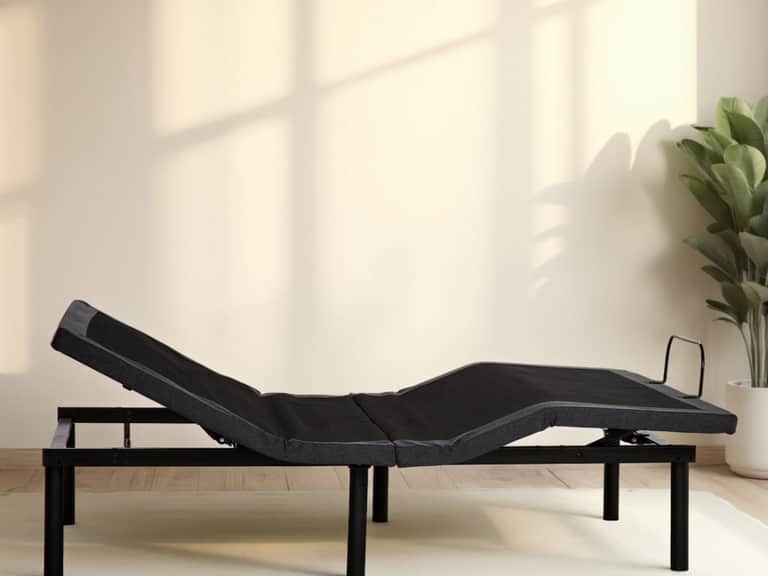
Independent head and foot lifts are the foundation of many adjustable bed bases. Because the two sections move separately, you can elevate your upper body without raising your legs, raise your legs without changing your head position, or combine both movements. For many households, this basic flexibility is the heart of the experience.
Think about your actual routines. Do you read or watch a programme in bed before sleeping? A head lift may be the feature you notice most. Do you like to rest with your legs elevated? Independent foot adjustment may be more relevant. Do you use the bed for more than sleeping, perhaps as a comfortable place to unwind or work briefly? The ability to make small changes to the surface may matter more than an extensive menu of functions.
Look for controls that let you adjust head and foot sections individually as well as together. A base that offers a simple return-to-flat control can be especially convenient at bedtime, when there is little appeal in navigating a series of settings. A remote with clearly labelled buttons and a layout that makes sense in low light can be just as valuable as a more elaborate feature set.
It is helpful to distinguish a preset from a separate mechanical function. A preset is a saved or preconfigured position; it does not, by itself, add a new kind of movement. Common examples across adjustable bases include flat, TV, or zero-gravity positions. These can make repeat use easier, but their value depends on whether you like the positions and can find them easily on the remote.
The Clean Bedroom levels, at a glance
The Clean Bedroom adjustable bed bases are arranged in levels, with each step adding a different combination of convenience and positioning options. The descriptions below focus on the features supplied for the range; exact sizing and availability can vary by model.
- Level 1: Independent head and foot lifts, a wireless remote with customizable presets, and adjustable legs with seven height settings. It is the streamlined starting point for shoppers who want positional flexibility without a long list of electronic extras.
- Level 2: Adds dual massage, underbed LED lighting, dual USB ports, and preset controls to independent head and foot movement. A split King option allows each sleeper to adjust their side independently.
- Level 3: Builds on the core adjustment with head tilt, dual massage, underbed lighting, USB ports, adjustable legs, and a wireless remote with multiple presets, including customizable memory positions.
- Level 4: Adds more specialized capabilities, including lumbar adjustment and a broader set of comfort and technology features. Its listed features include VibraSense massage, relaxation audio, underbed lighting, USB ports, customizable presets, and SnoreSense compatibility.
This progression is most useful when read as a set of priorities rather than a ranking in which higher automatically means better. A simpler base may be the more elegant choice if its movements cover your needs. Additional functions earn their place when you expect to use them regularly, and when their controls and setup fit comfortably into your life.
When head tilt and lumbar support become meaningful
A head lift changes the angle of the upper part of the bed. Head tilt offers a more specific adjustment around the upper-body area, creating an additional way to refine a position for reading, watching television, or using a laptop. For people who have found a standard head lift almost right but not quite, that added articulation may be worth considering.
Lumbar lift is a more specialized feature. Rather than simply raising the head or feet, it adjusts support around the lower-back area. This can appeal to shoppers who want more control over how the bed feels through the torso and waist. It is not a universal requirement, however, and it should not be treated as a medical treatment. If you have a health condition or persistent pain, discuss positioning questions with a qualified health professional instead of relying on a bed feature as a substitute for care.
More articulated movement can also mean more choices to learn. Before selecting a feature-rich model, consider whether you are comfortable making adjustments and whether the remote presents them clearly. Try to imagine the simplest possible routine: find a preferred position, save it if the base allows, and return to flat when you are ready to sleep. The best technology tends to feel natural rather than demanding attention.
Controls, presets, and the art of everyday ease
The remote is the point of contact between the base and the person using it. A thoughtfully arranged remote should make the primary actions easy to identify: head up or down, feet up or down, flat, and any position you use often. Extras such as memory buttons, timer controls, massage settings, or a child lock can be helpful, but only when their purpose is easy to understand.
Preset positions are convenient when they match your preferences. The Clean Bedroom Level 3 base, for example, lists zero-gravity, TV, anti-snore, and flat presets, along with two customizable memory positions. A customizable setting can be particularly useful if you repeatedly return to the same arrangement. Instead of recreating it each time, you can save a position and call it up again. Before buying, confirm which presets are included with the model you are considering, and whether the controls allow the customization you want.
Features described with names such as “anti-snore” or “zero gravity” should be understood as positioning options, not guaranteed health outcomes. Individual comfort varies, and a preset may not suit every sleeper. Treat it as a starting point for adjustment rather than a promise of a particular result.
Also consider where the remote will live. If it is wireless, think about how you will keep track of it and whether the buttons are easy to distinguish by touch. For shared beds, consider whether one remote controls both sides or whether each sleeper has independent control. In split configurations, independence can be central to the value of the setup.
Massage, lighting, and charging: useful extras or clutter?
Massage settings can add a relaxing element to a bedtime routine, while underbed lighting can make it easier to see the floor without switching on a brighter room light. USB ports can keep a phone or other compatible device close at hand. These are convenience features, not the core mechanics of adjustability, so it is worth asking how often they would be used before allowing them to drive your decision.
Massage features differ in their controls and descriptions. Some models offer dual massage or separate head and foot controls; others list multiple modes, intensity adjustments, or timers. The Level 3 base includes dual massage settings with separate head and foot controls, modes, and timer options. If massage is important to you, compare those controls carefully and make sure you understand what the specific model offers. Do not assume that the word “massage” means the same experience across every base.
Underbed lights may be a welcome detail in a dark room, particularly for nighttime movement. On the Level 2 and Level 3 descriptions, lighting is included among the added features; Level 3 specifies multicolour underbed lighting. Consider whether you want a gentle practical light, a range of colour options, or no illumination at all. A feature is only an advantage if it suits the mood and habits of your space.
USB ports are straightforward in principle but still deserve a practical check. Note how many ports are listed, where they are positioned, and whether their location works with your bed layout and usual charging habits. A pair of ports can make a bedside routine more convenient; it does not remove the need to check cable reach or decide where devices should be placed while charging.
Fit matters: mattress, frame, room, and lift capacity
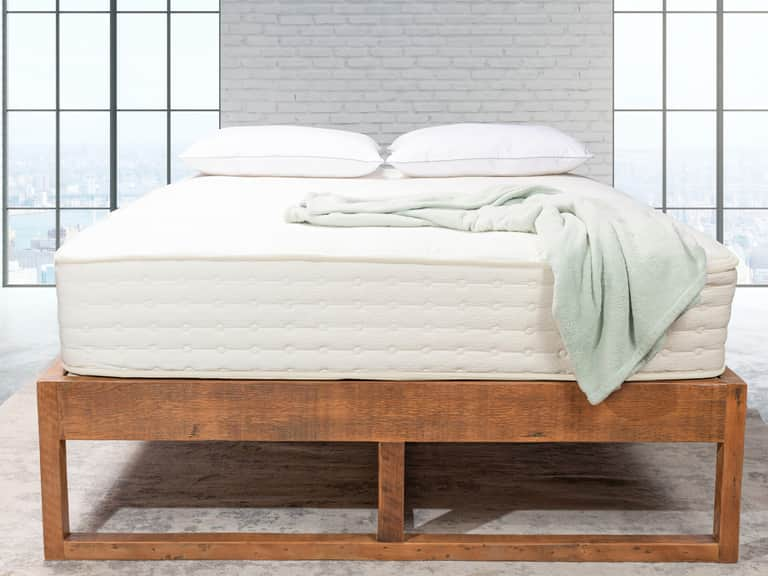
Even a beautifully equipped adjustable bed base must work with the rest of the bed. Start with mattress compatibility. Not every mattress is designed to flex with an adjustable foundation, and the extent to which a mattress bends comfortably can depend on its construction. Check the mattress manufacturer’s guidance and the base specifications before purchasing, rather than assuming that an existing mattress will work simply because it fits the dimensions.
Next, review the bed frame and room. The Clean Bedroom’s bases are described as compatible with platform and pedestal setups, but compatibility should always be confirmed for the exact combination of base, frame, and mattress. The Level 3 base lists adjustable 3-in-1 stacking legs with seven height options, from 2 to 13 inches. That range can help accommodate different room arrangements, but it is still important to measure the available space, including under-bed clearance and the height of the completed sleep surface.
Measure more than the mattress. Check doorways, hallways, staircases, and turns along the delivery route, particularly for heavier components or larger sizes. The listed Level 3 base weights range from 97 pounds for Twin XL to 158 pounds for King. These figures help signal that setup and placement deserve planning. Confirm the delivery, assembly, and installation details before ordering, especially if access to the bedroom is tight.
Lift capacity is another specification worth checking. A base’s stated capacity needs to accommodate the combined load it is designed to support, including the mattress and sleepers. Do not infer capacity from appearance or from another model in the range. Confirm the precise limit for the size and configuration you plan to buy, and follow the manufacturer’s guidance for use.
For couples, decide whether independent adjustment is essential. A split arrangement can give each sleeper more personal control, but it may involve different sizing and mattress considerations from a single-piece King. The Level 2 description lists a split King option. Confirm what is available for the chosen level and size, and discuss how the two sides will work with your mattress, bedding, and preferred setup.
A closer look at the Level 3 Adjustable Bed Base
For shoppers drawn to a balance of positioning and everyday conveniences, The Clean Bedroom Level 3 Adjustable Bed Base brings together independent head and foot lifts with head tilt. It also includes dual massage, underbed LED lighting, dual USB ports, adjustable leg heights, and a wireless remote with preset positions. Its listed presets include zero-gravity, TV, anti-snore, and flat, along with two customizable memory positions.
That combination makes Level 3 a useful reference point in a comparison. It offers more than the essential movement of a base focused primarily on head and foot adjustment, yet it does not include every advanced feature listed for Level 4, such as lumbar lift or SnoreSense compatibility. For someone who expects to use head tilt and appreciates built-in lighting or charging access, those additions may feel like a natural fit. For someone who rarely adjusts the bed, the simpler levels may be more appropriate.
Use the specification as a checklist, not a verdict. Confirm size availability, frame compatibility, included controls, and the precise configuration before purchase. Features can sound compelling in a description, but their real value depends on how they correspond to your habits and physical setup.
A simple framework for choosing the right level
To make a comparison less abstract, divide the decision into three tiers: essential, useful, and optional. Essentials are the movements you expect to use frequently. Useful features improve a routine you already have. Optional features are pleasant possibilities that may or may not become part of daily life.
- Choose the essential movement. Decide whether independent head and foot adjustment is enough, or whether head tilt or lumbar lift answers a specific comfort preference.
- Identify your most repeated position. If you often read or watch television in bed, prioritize easy head adjustment and a remote you can operate without effort.
- Think about sharing. If two sleepers have different routines, ask whether a split configuration and independent adjustment are available in the size and level you need.
- Choose only the conveniences you will use. Massage, lighting, and USB ports can be worthwhile, but weigh each one against its role in your ordinary routine.
- Verify the physical fit. Check mattress compatibility, frame support, height range, room dimensions, access route, and lift capacity for the exact model.
- Consider the learning curve. Choose controls and presets that feel clear enough to use consistently, rather than features that remain confusing after the novelty wears off.
A compact note on your phone or a short list before shopping can help keep the comparison focused. Record your preferred sleeping and lounging positions, the dimensions of the room, the mattress model, and any must-have frame requirements. Then compare those needs against the published specifications for each base.
Features are not a substitute for fit or care
An adjustable base can expand the ways you use a bed, but it cannot resolve every discomfort or guarantee better sleep. Comfort depends on the full setup: mattress, pillow, bedding, personal preferences, and the conditions of the room. If a position feels awkward, adjust gradually and return to a neutral setting when appropriate. If you have a medical concern, seek guidance from a qualified clinician.
Routine care also matters. Follow the manufacturer’s instructions for cleaning and maintenance, keep liquids away from electrical components, and disconnect power before carrying out any care that requires access to the base. For the Level 4 base, the listed care guidance specifies unplugging before cleaning and spot-cleaning only. Always follow the instructions supplied with the particular product you own, since care directions may differ.
The final comparison: choose a base for your life, not its brochure
The most satisfying adjustable bed base is not necessarily the most technologically ambitious. It is the one that feels considered: movement that answers a real need, controls that are easy to reach, a frame and mattress that work together, and extras that earn their place rather than crowding the decision.
For a clean, uncomplicated starting point, focus on independent head and foot lifts, preset controls, adjustable height, and verified compatibility. If your routine calls for finer positioning, consider head tilt or lumbar support. If you know that massage, underbed lighting, or charging access will be used, compare those features in context. If sharing the bed, look closely at split options and independent control.
The Clean Bedroom’s adjustable bed levels make that progression legible, from essential articulation to a broader set of convenience and positioning features. Compare them against your own nightly rituals, measure carefully, and verify the specifications before deciding. With that approach, choosing among adjustable bed bases becomes less about chasing every feature and more about creating a bed that feels quietly, personally right.